A licence never guaranteed you could reach your balance
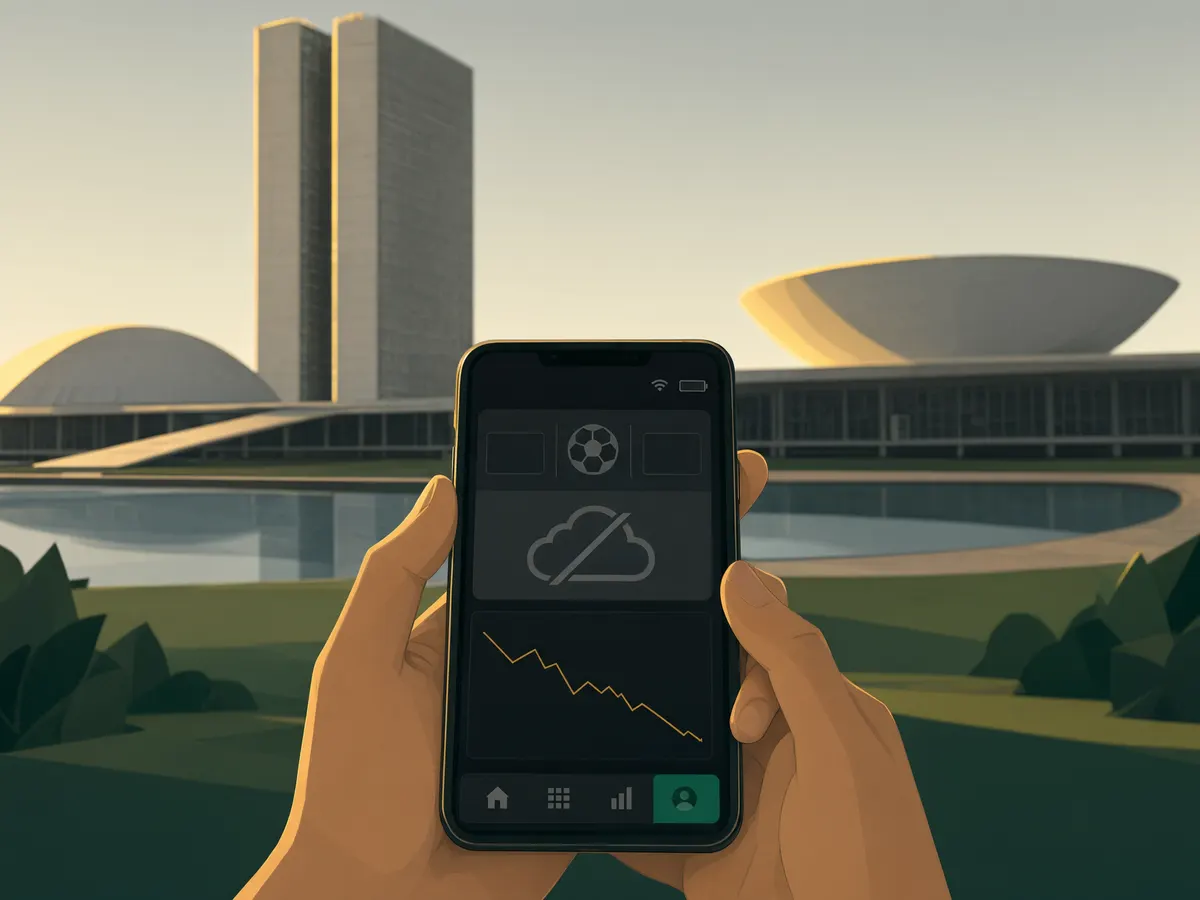
The comfortable belief among regulated-market punters is that a government authorisation means your money is always one tap away. Brazil just disproved it at national scale. With 187 of 188 previously authorised brazil betting sites offline, R$1.325bn still sits unreturned to roughly 26.5 million account holders, and the only route back to that cash now runs through banks and taxpayer numbers rather than a cashier page.
This is not an operator collapse or an exit scam. It is the opposite scenario, and in some ways a more uncomfortable one: the same state that issued the licences switched the whole market off on a published timetable, and the money is being moved by decree. Licensing protected the existence of the funds. It did not protect access to them.
The figures, and what they quietly tell you
Brazil’s Ministry of Justice and Public Security said in a statement on October 6 that the shutdown had followed the schedule set out in Provisional Measure No. 1,394/2026, which prohibits the operation, offering, intermediation and advertising of fixed-odds betting in the country. Of the 188 sites that had been operating with authorisation until that Monday, the government identified exactly one still live. Blocking was requested, and enforcement authorities were told to monitor compliance.
The voluntary withdrawal window, the period in which customers could simply log in and cash out as normal, closed at 11:59pm on October 5. Operators then had until October 7 to hand financial institutions each customer’s remaining balance, identified by CPF taxpayer number.
| Date | What happened |
|---|---|
| 5 October, 11:59pm | Deadline for customers to withdraw their balances voluntarily expires |
| 6 October | Ministry statement: only one of 188 authorised sites found still operating; blocking requested |
| 7 October | Operators’ deadline to supply financial institutions with each customer’s remaining balance, keyed to CPF |
| 8 October | Position reported: R$1.325bn still awaiting repayment to around 26.5 million bettors |
Run the division and the real story appears. R$1.325bn spread across 26.5 million bettors averages R$50 a head. That is not a market of high rollers with five-figure balances trapped behind a blocked domain. It is an enormous tail of small, half-forgotten accounts: the R$12 left after a weekend accumulator, a bonus remnant, a deposit someone made once and never touched again. Most of those people were never going to log in before a Sunday-night cutoff, because most of them had stopped thinking about the account at all.
That matters for how you read the number. R$1.325bn outstanding is not evidence that operators refused to pay. It is evidence of how much dormant value a licensed market accumulates once it has tens of millions of registered users, and how little of it moves voluntarily when you give the public a few days’ notice.
The cause: one provisional measure, immediate force
The trigger is legal, not commercial. A provisional measure in Brazil is an instrument the executive can issue with immediate effect, which then has to clear Congress inside a constitutional window or lapse. MP 1,394/2026 did not tighten advertising rules or raise taxes. It banned the activity: operating, offering, intermediating and advertising fixed-odds betting. The licences issued under the regulated regime that opened in 2025 became worthless the moment the timetable bit.
Think about what that does to the economics of a betting license brazil operators paid real money for. The authorisation regime was deliberately expensive, built around a multi-million-real grant fee for a five-year term covering a small number of brands, plus compliance, certification, local incorporation and tax obligations. Companies bought that package on the assumption that the state wanted a licensed market and would defend it. They now hold a permission that cannot legally be used, with the shutdown costs on their side of the ledger.
The regulator that built the framework, SPA, the betting secretariat sitting inside the finance ministry, spent two years constructing authorisation lists, technical standards and payment rules. A single executive instrument from a different arm of government unwound the commercial basis of all of it. Whatever you think about the merits of banning fixed-odds betting, that sequence is the part the rest of the industry will remember.
The fix on offer: repayment by CPF, through the banks
With the sites dark, the repayment mechanism no longer involves the operator’s interface at all. Balances were to be transferred to financial institutions identified by CPF, which is the sensible design choice, because the taxpayer number is the one identifier that ties a betting account to a verified bank relationship under Brazil’s KYC rules. In practice, the money is meant to find the person rather than the person finding the money.
Three practical consequences follow, and they apply to anyone with a Brazilian account still holding funds.
- Check the bank, not the betting app. The domain may be blocked and the app pulled; that tells you nothing about whether a credit has landed. Look at statements for the account registered under your CPF, and keep an eye on the balance history over coming weeks rather than a single day.
- Keep your own evidence. Screenshots of your last balance, deposit confirmations and account email are the only record you control once a site is offline. If a figure arrives short, that paperwork is your case.
- Treat every “unblock your funds” message as a scam. A repayment programme that works through financial institutions and taxpayer numbers has no reason to ask you for a fee, a crypto transfer, a one-time code or a remote-access session. Mass shutdowns are prime hunting season for exactly that pitch.
The weakness in any CPF-keyed player fund repayment is the mismatch cases: accounts opened with outdated bank details, people who have changed institutions, inheritors of dormant accounts, balances flagged in disputes. With 26.5 million holders involved, even a small error rate means a large absolute number of unresolved cases, and nothing published so far tells those users where to queue.
The credibility bill the brazil regulated betting market now has to pay
Here is the part that travels beyond Brazil. The strongest argument any regulator has for pushing players away from offshore sites is simple: inside the licensed perimeter, your funds are ring-fenced and your access is reliable. Brazil gambling regulation has just produced a case study in which the licensed perimeter closed on a published schedule and R$1.325bn became a bank-mediated claim instead of a withdrawal button. Every grey-market operator marketing to Brazilian users will repeat that for years, and the honest counter-argument is thinner than regulators would like.
Demand, meanwhile, does not vanish because 187 domains do. Tens of millions of people were betting legally last week. A share of them will stop, a share will move to lotteries and other permitted products, and a share will go looking for sites with no CPF checks, no local recourse and no obligation to return anything. Blocking orders slow that migration; they have never stopped it in any market that has tried.
For operators and investors, the lesson is about jurisdiction risk rather than compliance risk. You can pass every technical audit, pay every fee, hit every advertising rule and still be switched off by an instrument that takes effect before Congress has voted on it. The next emerging market pitching a licensing round will be asked, pointedly, what happens if the government changes its mind, and “we are regulated” will no longer be a sufficient answer.
Two things are worth watching from here: whether the outstanding R$1.325bn actually reaches account holders without a public complaints backlog, and what Congress ultimately does with MP 1,394/2026 inside its constitutional lifespan. The first decides whether Brazilian players believe the state when it talks about protecting them. The second decides whether there is a legal market left to protect.
If you held a balance on a Brazilian site, treat this as an administrative process and nothing more urgent than that: verify through your bank, keep records, ignore anyone who contacts you asking for payment. And if the shutdown has removed an activity that was costing you more than you were comfortable with, that is a reasonable moment to leave it closed. Support services for gambling harm remain available regardless of whether any site is online.